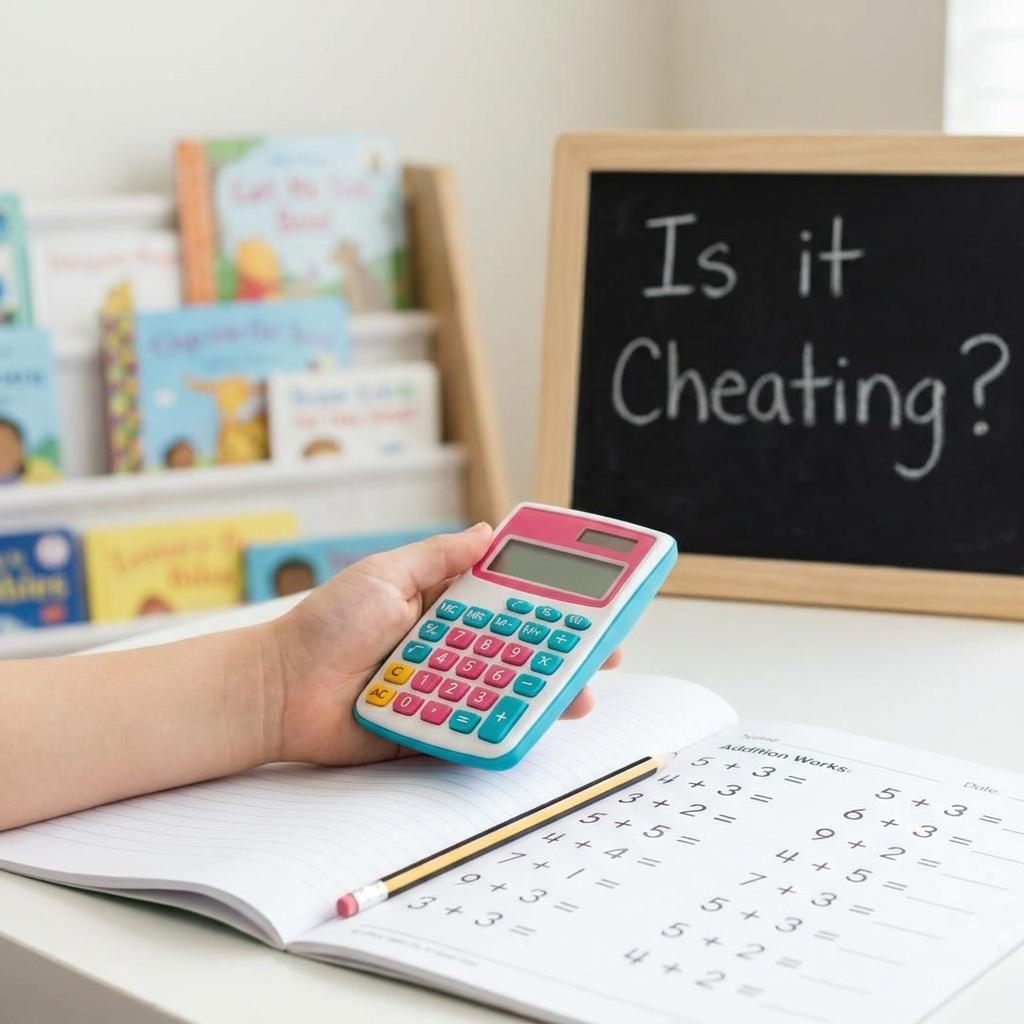
An addition calculator improves basic math fluency by reinforcing number recognition, reducing calculation errors, and helping learners practice repetition without mental overload. It builds confidence through instant feedback, allowing users to understand patterns in numbers faster while gradually strengthening their mental arithmetic ability over time.
Introduction
Most people think math fluency means “doing calculations quickly in your head.” That’s only half the story.
Real fluency is more about comfort with numbers — how naturally you process them without hesitation. It’s the difference between someone who sees “47 + 38” and immediately feels calm versus someone who freezes and starts counting on their fingers.
And honestly, that hesitation is where most learners get stuck — not because they lack intelligence, but because they never built enough repetition to feel safe around numbers.
Think about language fluency for a moment. Nobody becomes fluent in a language by reading grammar rules once. They become fluent by hearing, speaking, and repeating words thousands of times until responses feel automatic. Math fluency works exactly the same way. The brain needs repeated exposure before it stops treating every calculation as a problem to solve from scratch.
When someone struggles with basic addition, it’s rarely because they don’t understand numbers. It’s usually because they second-guess themselves. That pause — even if it’s just a few seconds — breaks confidence. It slows everything down. And over time, that slow-down turns into avoidance.
This is where the ToolzDaily Addition Calculator quietly changes the game. Instead of forcing mental pressure, it gives instant feedback. You try a sum, you see the result, and your brain starts building a pattern library in the background. It’s subtle, but it is genuinely powerful.
The tool doesn’t lecture you. It doesn’t grade you. It simply shows you what’s right and what’s wrong — immediately. That immediacy is the whole point.
I’ve seen students who once avoided math slowly start engaging with it just because the pressure was removed. Not because the calculator “did the thinking for them,” but because it made repetition painless. When repetition stops feeling like punishment and starts feeling like practice, everything changes.
There’s also a confidence component that people overlook. When a learner gets an answer right and sees that confirmed instantly, it creates a small but real moment of satisfaction. Repeat that enough times and math stops being something to fear. It becomes something to do.
And repetition is where fluency is born. Every expert in any field will tell you the same thing — comfort comes from volume of practice, not intensity of one session.
What an Addition Calculator Actually Does
An addition calculator is often misunderstood. People assume it replaces thinking. That’s not accurate — and that assumption is exactly why so many learners miss out on what it can genuinely offer.
What it actually does is remove friction. And friction, in the context of learning math, is one of the biggest invisible barriers that exists.
Here’s what friction looks like in practice: a student sits down to do homework, gets stuck on a calculation, waits, second-guesses, eventually writes something down, moves on, and never finds out if that step was right or wrong until a teacher returns the paper two days later. By then, the moment of learning has passed. The brain has moved on.
When a learner uses the addition calculator to check their working, they aren’t just getting answers — they’re getting immediate correction feedback at exactly the right moment. That feedback loop matters more than most people realize.
The brain learns faster when it gets instant validation. No waiting. No doubt. The connection between “I did this” and “this is what happened” stays tight and clear.
Think about it this way: if you solve ten problems manually and check them an hour later, your brain has already “moved on.” You’re no longer in the mindset you were in when you made the mistake. But when correction is instant — when you enter 34 + 19, expect 53, and immediately see 53 confirmed — your attention locks onto the pattern. When you expect 53 and see 53, that pathway in your brain gets reinforced. When you expect 52 and see 53, your attention sharpens immediately on that single digit difference.
That’s where learning happens. Not in the waiting — in the immediacy.
Another massively overlooked benefit is pattern recognition. After even a few sessions, learners start noticing how numbers behave. They notice that adding 9 to anything always ends up one less than adding 10. They notice that 8 + 7 always lands near 15. They notice that breaking numbers apart — like splitting 37 into 30 and 7 — makes addition faster and easier.
These aren’t things a calculator tells them. These are things the brain figures out on its own through repeated, frictionless exposure. The calculator just makes that exposure painless enough to actually happen.
It’s not magic. It’s repetition with feedback — which, as it turns out, is the most powerful learning mechanism humans have.
In experience working with beginners, the biggest improvement is never speed — it’s confidence. People stop freezing when they see numbers. They stop avoiding problems. They start approaching math with curiosity instead of dread. That shift is harder to measure than a test score, but it matters far more in the long run.
How Repetition Builds Real Math Fluency
Fluency in math isn’t built in one session. It isn’t built in one week. It’s built in loops — small, consistent, repeated loops that slowly train the brain to respond automatically instead of analytically.
You solve. You check. You adjust. Then you repeat.
That cycle, done consistently, trains the brain to stop overthinking. It’s the same mechanism behind any skilled performance — a musician who no longer thinks about finger placement, a driver who no longer thinks about which pedal to press. Fluency is what happens when a skill moves from conscious effort to automatic response.
When learners repeatedly practice with a reliable tool, they begin forming automatic responses to simple calculations. Enter a few numbers. See the result. Absorb the pattern. Repeat tomorrow. It sounds simple because it is simple — and that simplicity is exactly what makes it work.
What’s interesting is that repetition doesn’t just improve speed. It reduces fear. And fear, not lack of knowledge, is often the true barrier standing between a learner and math confidence.
Think about the student who knows the steps but panics during a test. Or the adult who avoids checking their own bills because “math was never their thing.” These aren’t people who failed to learn math. They’re people who never built enough repetition to feel safe with it. The knowledge is there. The comfort isn’t.
Once that fear fades — once numbers start feeling familiar rather than threatening — everything else becomes easier. Word problems feel less overwhelming. Multi-step calculations feel less daunting. The brain stops spending energy on managing anxiety and starts spending it on actual thinking.
There’s a pattern especially visible in younger students: after consistent exposure to instant feedback tools, they stop treating math like a “test” and start treating it like a “process.” They understand that getting a wrong answer isn’t failure — it’s information. That reframe is profound. It’s the difference between a student who gives up and a student who tries again.
Here’s a slightly unpopular opinion worth stating plainly — too many learners skip repetition and jump straight to “advanced shortcuts” or trick methods they found online. That approach almost always slows down long-term fluency. Shortcuts are useful only when the foundation is solid. Without repetition of the basics, shortcuts become confusing additions to an already shaky structure.
You cannot bypass fundamentals. You can only strengthen them. And the most effective way to strengthen them is through consistent, low-pressure, high-feedback repetition — exactly what a well-designed addition practice tool enables.
The learners who improve fastest are not the ones who try hardest in a single session. They’re the ones who come back the next day, and the day after that, and keep building those small loops until the responses become effortless.
That is what real math fluency looks like.
How It Helps Students With Homework Performance
Homework is where most math confidence either builds or breaks. It’s the daily proving ground — the place where what was taught in class either holds up or falls apart under the quiet pressure of sitting alone with a problem.
And addition errors are some of the most damaging mistakes a student can make during homework, not because they’re complex, but because they’re invisible. A student can understand every concept in a multi-step problem perfectly and still get the whole thing wrong because they carried a number incorrectly in step two. That’s genuinely demoralizing. They know the method. They understood the lesson. But the answer is wrong, and they don’t know why.
This gap between understanding and accuracy is where so many students lose confidence. They start to believe they’re “bad at math” when what they’re actually experiencing is a feedback delay — they won’t find out what went wrong until a teacher returns their work, sometimes days later. By that point, the specific moment of confusion is long gone.
This is where checking each step as you go becomes a genuine game-changer for students. Instead of waiting to find out what went wrong, they find out immediately — while the problem is still fresh, while the context is still clear, while the learning can actually land.
Some of the most common errors students make during addition-heavy homework include carrying errors where the tens digit gets forgotten or doubled, misreading numbers especially 6s and 9s or 1s and 7s under pressure, and simply losing track of position during longer calculations involving multiple rows of numbers. None of these are signs of not understanding math. All of them are signs of attention slipping — which happens to everyone, especially under time pressure.
When students develop a habit of verifying calculations as part of their homework process — not replacing their own work, but confirming it — something shifts. They stop repeating wrong patterns. They catch their own mistakes in real time. And over weeks and months, those habitual errors simply disappear because they were corrected consistently instead of being reinforced through unnoticed repetition.
The students who improve most dramatically are often not the ones who were struggling with concepts. They were struggling with accuracy checking. Once that piece clicks, their performance improves quickly — not because they learned something new, but because they stopped unknowingly practicing the wrong thing.
That is the hidden value that most people never talk about when discussing math tools.
Teacher and Classroom Use
Teachers are not short on content. They have lesson plans, textbooks, curriculum standards, and years of subject knowledge. What they are often short on is time — specifically, time to give every student the individual feedback they need in the moment they need it.
A classroom of twenty-five students solving addition problems simultaneously means twenty-five different moments of potential confusion happening at the same time. A single teacher cannot be in twenty-five places at once. So mistakes go unaddressed. Confusion compounds. Students who needed a correction in minute three are sitting in confusion by minute fifteen, too embarrassed to ask.
This is the gap that a fast, reliable addition tool helps fill. When students have access to immediate answer verification during practice, they don’t have to wait for the teacher to reach their desk. They solve, they check, they self-correct, and they move forward. The teacher is freed from the role of arithmetic referee and can focus on what actually requires human expertise — explaining reasoning, addressing conceptual confusion, supporting students who need more than a number confirmed.
In practical classroom applications, this kind of tool works well for independent practice sessions where students work through problem sets and verify answers as they go, for demonstration purposes where a teacher projects the tool and uses it to walk through addition logic step by step, and for structured exercises where students solve first on paper and then verify — building the habit of self-checking that will serve them across all of mathematics.
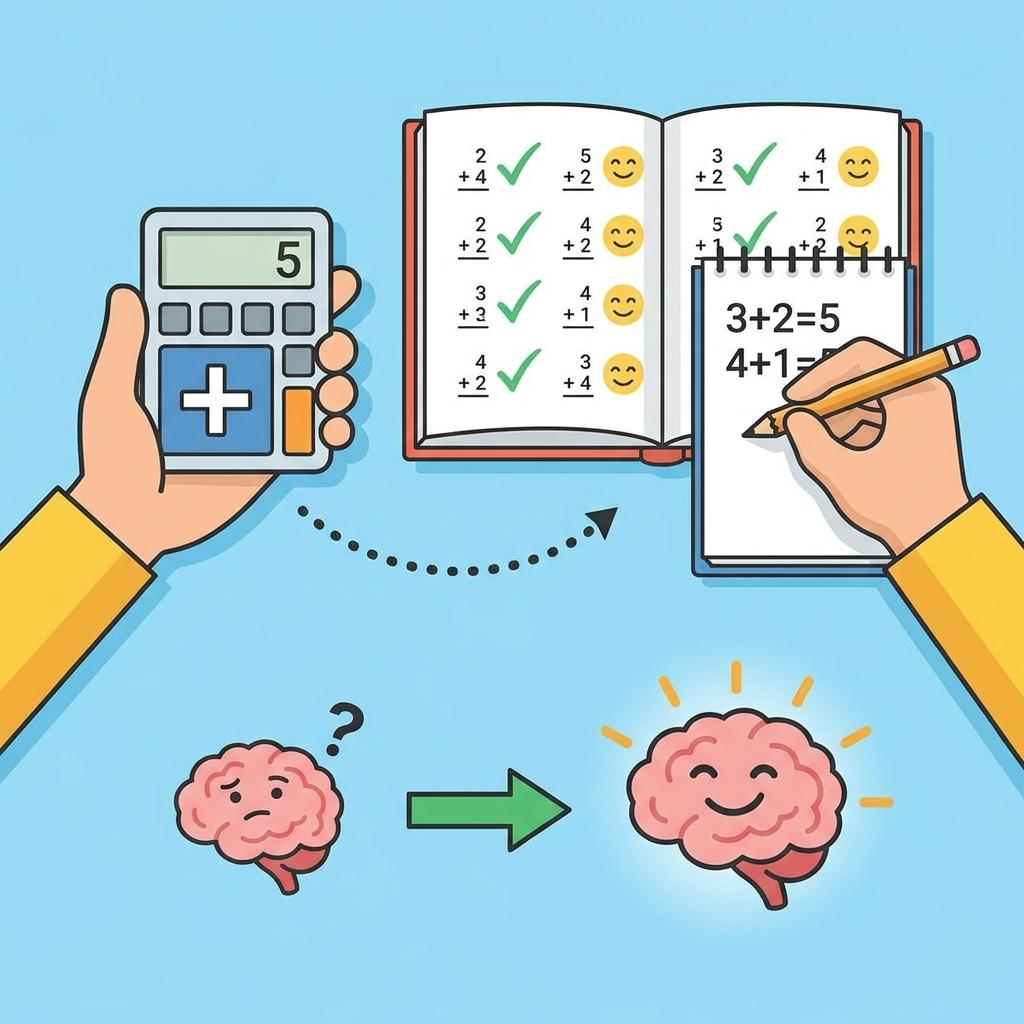
One teaching approach that works particularly well is using the calculator as a “confidence checkpoint” rather than a shortcut. The rule is simple: solve the problem yourself first, then check. If you’re right, move on with confidence. If you’re wrong, go back and find where your thinking diverged from the answer. This structure keeps the cognitive work with the student while removing the sting of not knowing whether you’re on the right track.
Teachers who have used this approach consistently report increased participation during practice time. Students who would normally stay silent — afraid to be wrong publicly — are more willing to attempt problems when they know they can verify quietly. That psychological safety is not a small thing. It changes who participates and how often.
Real-Life Use of Addition Beyond the Classroom
Addition doesn’t retire when school ends. If anything, it becomes more frequent and more consequential in everyday adult life than it ever was in a classroom setting.
Consider how often addition appears in a single ordinary day. Calculating whether a grocery run will exceed a budget. Adding up travel time across connecting flights. Splitting a restaurant bill between four people. Tallying how many hours were worked across a week. Estimating whether a project will come in under a cost ceiling. These are not abstract problems on a worksheet. They are real decisions with real consequences, and they happen constantly.
Most people handle these calculations reasonably well most of the time — but “most of the time” still leaves a significant margin for small errors. And small errors in financial contexts have a habit of accumulating. An overspent grocery budget here, a miscalculated split there, a slightly wrong hours total at the end of the month — none of these feel significant individually, but together they represent real money and real miscommunication.
What’s interesting is that quickly verifying everyday calculations does more than prevent errors. It changes how people relate to numbers in their daily lives. When someone consistently checks their mental math and finds it correct, they gain trust in their own numerical instincts. That trust changes behavior. They feel more confident negotiating. More comfortable budgeting. More willing to engage with financial decisions that they previously handed off to others because “math isn’t my thing.”
The reverse is also true — when someone catches a repeated error pattern through consistent verification, they become more careful at exactly the point where they need to be. Not paranoid, just appropriately attentive.
In budgeting specifically, the habit of double-checking addition consistently reduces small overspending errors. Not in dramatic one-time corrections, but in the steady accumulation of slightly better decisions made with slightly more numerical confidence. Over months, that adds up to something real.
The broader point is that math fluency isn’t just an academic skill. It’s a life skill that affects financial wellbeing, professional performance, and daily decision-making in ways most people don’t stop to consider. Building that fluency through consistent, low-pressure practice has returns that extend far beyond any test score.
Speed and Accuracy — and Why People Confuse Them
There’s a widespread misconception about what it means to be “good at math,” and it centers on speed. People equate mathematical ability with how fast someone can produce an answer. In reality, speed is a byproduct of fluency, not a measure of it.
The goal is not to rush. The goal is to reduce hesitation — which is a meaningfully different thing.
Hesitation in math comes from uncertainty. When someone isn’t sure whether their calculation is right, they slow down to double-check mentally, lose their train of thought, and often end up less accurate than if they had simply committed to an answer. That hesitation spiral is not a skill problem. It’s a confidence problem rooted in insufficient repetition.
When learners practice regularly and use tools to verify their work, the hesitation gradually decreases. Not because they’re forcing themselves to go faster, but because familiarity with number patterns removes the need to pause and reconstruct every calculation from scratch. The answer starts arriving before the doubt does.
Accuracy and speed improve together through this process — not separately, and not by focusing on either one directly. Accuracy improves because mistakes become immediately visible and get corrected before they calcify into habits. Speed improves as a natural result of those corrections accumulating into pattern recognition. You stop counting slowly because you start recognizing instantly. That recognition is what speed actually is.
This is why deliberate, consistent addition practice with real-time feedback is more valuable than timed drills or pressure-based exercises. Timed drills increase anxiety, which increases hesitation, which reduces both speed and accuracy. Calm, feedback-rich practice reduces anxiety, which reduces hesitation, which allows speed and accuracy to grow naturally together.
The research on skill acquisition across domains is consistent on this point — pressure accelerates performance only after a foundation of calm, repetitive practice has been established. For most learners, that foundation simply hasn’t been built yet. The solution is more repetition, not more pressure.
Common Mistakes in Addition and How to Correct Them
Addition errors get dismissed as careless mistakes, and that dismissal is one of the most counterproductive habits in math education. Calling something a careless mistake implies it doesn’t need further attention — that it was just a momentary slip that won’t happen again. In reality, most addition errors are systematic. They happen for the same reason, in the same type of problem, over and over — until someone actually identifies and addresses the specific cause.
The most frequent addition errors fall into a few predictable categories.
Carrying errors are the most common. When adding multi-digit numbers, the tens digit from a column sum needs to be carried to the next column. Students who haven’t fully automated this process either forget to carry entirely, carry the wrong digit, or carry it to the wrong column. These errors are almost never random — they follow a pattern that reflects exactly where the learner’s automaticity breaks down.
Digit misreading errors happen more than people realize, especially under time pressure. A 6 becomes a 0. A 1 becomes a 7. A 3 becomes an 8. Handwriting plays a role, but so does rushing — the eye sees what the brain expects rather than what’s actually written. Slowing down and verifying removes this entirely.
Place value errors — particularly losing track of which digit belongs in which column during longer additions — become more frequent as numbers get larger and the visual layout of the problem becomes more complex. Students who haven’t internalized place value deeply enough start to drift, adding digits that belong to different columns.
Distraction errors are real too. Mid-calculation interruptions cause people to lose track of where they were. These aren’t knowledge failures at all — they’re working memory limitations that can be mitigated by verifying work step by step.
The power of identifying these patterns early through consistent checking is that correction becomes targeted rather than general. Instead of telling a student to “be more careful,” you can identify that they specifically struggle with carrying in three-digit sums and address that exact gap.
Mistakes are not the problem. Repeated, unexamined mistakes are. The distinction sounds simple, but it completely changes how a learner should respond to getting something wrong. An error caught immediately and understood is not a failure. It’s the most efficient possible unit of learning.
Final Thoughts
Math fluency is not a talent. It is not something some people are born with and others aren’t. It is a skill built through consistent exposure, honest feedback, and enough repetition that numbers start to feel familiar rather than foreign.
An addition calculator, used thoughtfully, is not a crutch. It’s a training environment. It removes the pressure that causes hesitation, provides the feedback that makes repetition useful, and creates the conditions under which genuine fluency can develop — for students, for adults, for anyone who has ever felt that quiet discomfort when numbers appear.
The shift it enables isn’t dramatic. It’s gradual. A little more confidence this week. A little less hesitation next week. A small pattern noticed that makes mental math slightly faster. A wrong answer caught before it becomes a wrong habit. Over time, those small shifts accumulate into something real — a fundamentally different relationship with numbers.
If there is one thing worth taking from everything covered here, it’s this: fluency comes from repetition plus feedback, not from talent or pressure or trying harder in a single sitting. Build the habit. Check the work. Come back tomorrow. The comfort will follow.
Start building that habit with the ToolzDaily Addition Calculator — a simple, fast tool designed to make practice frictionless and feedback immediate.
Frequently Asked Questions
1. Does an addition calculator genuinely improve math skills? Yes, when used as a practice and verification tool rather than a replacement for thinking. It improves accuracy, builds pattern recognition, and strengthens confidence through consistent repetition and instant feedback — all of which are core components of real math fluency.
2. Can students use it daily without becoming dependent on it? Yes, provided they maintain the habit of attempting problems themselves before verifying. The calculator should function as a checkpoint, not a starting point. Students who use it this way build independence faster, not slower.
3. Does using a calculator undermine mental math development? No — it supports it. Mental math improves when the brain has enough correct patterns reinforced to retrieve answers automatically. Consistent verification practice is one of the most effective ways to build those patterns without the anxiety that slows the process down.
4. Is it useful for complete beginners? Particularly so. Beginners benefit most from immediate feedback because they haven’t yet developed the pattern library that more experienced learners can fall back on. Early, accurate feedback shapes the foundation before wrong patterns have a chance to become habitual.
5. Why does this approach improve fluency faster than traditional practice? Because fluency requires two things working together — repetition and feedback. Traditional practice provides repetition. A real-time verification tool provides the feedback. Together, they create a learning loop that is significantly more efficient than repetition alone or delayed feedback alone.

Author: Toolz Daily
Official Account Of Website Owner..