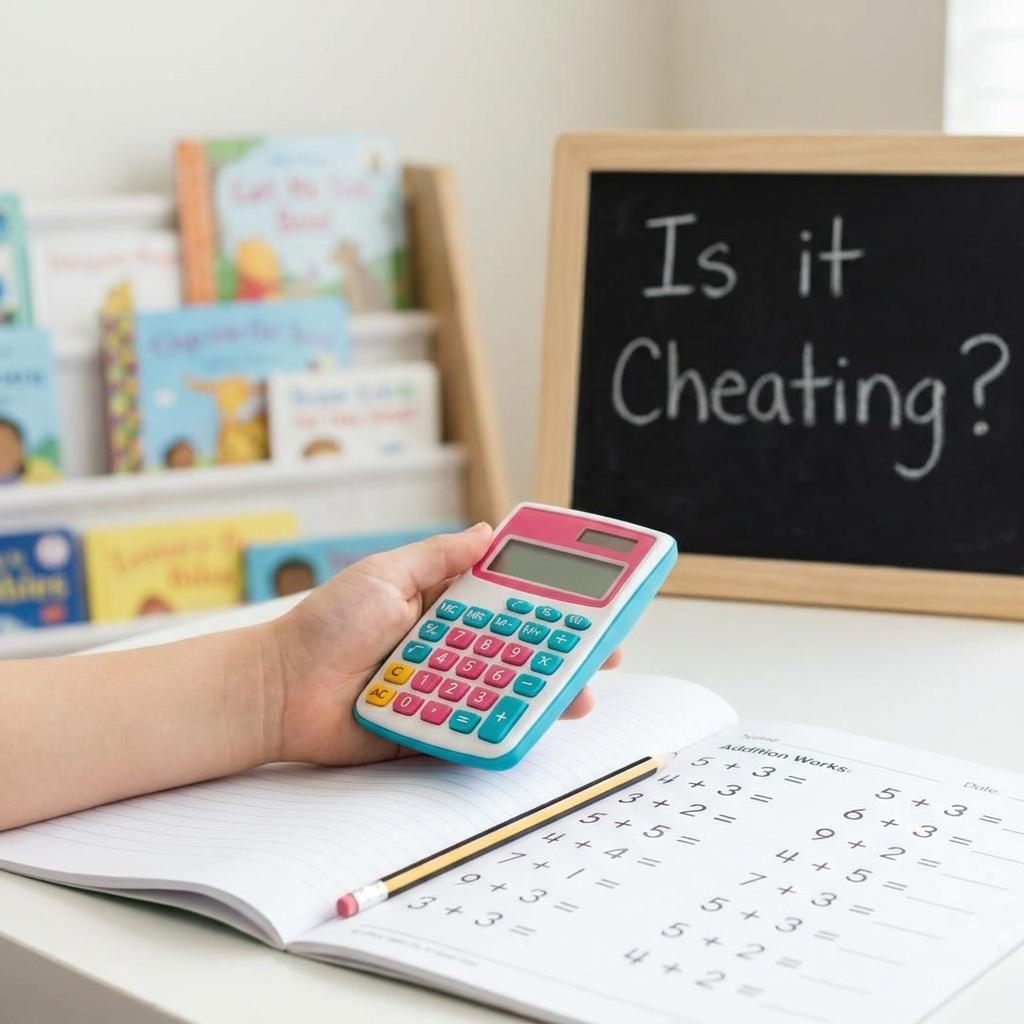
My neighbor’s daughter came home from third grade one afternoon completely shaken — not because she failed a test, but because her teacher caught her sneaking a peek at her mom’s phone to add up numbers during homework time. Her mom called it cheating. Her daughter called it “just being smart about it.” And honestly? Both of them had a point.
This debate has been simmering in schools and at kitchen tables for years. Is reaching for an Addition Calculator during early math learning a shortcut that stunts growth, or is it a useful tool that can actually support kids who are just getting started? Let’s talk about it properly — no hand-wringing, no oversimplification.
Why This Question Even Comes Up
Elementary school math is the foundation. Everyone agrees on that. But what people disagree on is whether using tools like an Addition Calculator during that foundation-building phase helps or hurts. And the answer, frustratingly, is: it depends.
When I helped a younger cousin with math homework last summer, I noticed she’d get genuinely excited about big numbers — but only when she felt safe making mistakes. The moment a problem felt “too hard,” she shut down. A quick check using a simple addition tool brought her back into the game. That one experience stuck with me, because it showed that the tool wasn’t the problem. The confidence gap was.
Simple addition problems — like 6 + 7 or 23 + 14 — are things kids need to be able to do in their heads eventually. Mental math skills matter for life. But there’s a big difference between a child who can’t add because they never practiced, and a child who uses a calculator while learning so they can keep up with the concept being taught. Those are two completely different situations.
The Real Concern: Dependency vs. Support
Teachers and parents tend to jump straight to the word “dependency.” If kids always reach for an Addition Calculator, will they ever build basic arithmetic fluency on their own?
Fair concern. But here’s where it gets nuanced.
Dependency becomes a real problem when a child uses a calculator instead of understanding. Not when they use one alongside understanding. There’s a wall between those two things, and classroom learning should be about identifying where each child sits.
A student who genuinely doesn’t know that 8 + 5 = 13 and just punches it into a calculator every single time — that’s a gap worth addressing. But a student who’s learning multi-step word problems, and who uses a quick calculation check to keep up with the logic of the question rather than getting stuck on arithmetic? That child might actually learn more, not less.
What Teachers Usually Don’t Say
Here’s something teachers often don’t say out loud: a huge chunk of math anxiety in kids comes from small arithmetic mistakes that spiral into big failures. A child who knows the concept but fumbles the addition loses the whole problem. That’s discouraging in a way that’s hard to recover from.
Using a reliable Addition Calculator to verify steps — not to skip thinking, but to check it — can actually protect kids from that spiral. It keeps the focus on understanding the process, not just getting the right final number.
Also worth knowing: many teachers quietly allow calculators for kids with processing difficulties or dyscalculia, not because they’re “giving up” on those kids, but because accessibility matters. The calculator becomes a bridge, not a crutch.
I noticed many kids freeze when numbers get too long — even kids who fully understand addition as a concept. Something like 347 + 589 can make a seven-year-old blank out entirely, not because they can’t add, but because the number of digits feels overwhelming. Letting them use this simple math helper in those moments gives them a foothold, not a free pass.
The Contrarian Take (That Most People Won’t Say)
Here’s an opinion that tends to ruffle feathers: the idea that elementary school kids should do all math without any tools at all is, in some ways, already outdated.
Think about it. Adults — including engineers, accountants, and teachers themselves — use calculators constantly. No one considers a professional “weak” for using a tool to do quick calculations. The skill isn’t in performing arithmetic by hand every single time. The skill is in knowing which operation to use, why you’re using it, and whether the answer makes sense. Those are the thinking skills that deserve center stage in math education.
Banning the Addition Calculator entirely from elementary math learning can sometimes teach kids that math is about performing tricks under pressure — rather than understanding why numbers behave the way they do. That mindset can do more damage to long-term math confidence than any calculator ever could.
Common Mistakes Parents Make
The first one is treating “calculator use” and “not learning” as the same thing. They’re not. A kid who uses a calculator to check their work is doing something fundamentally different from a kid who skips the thinking entirely. Watch how your child uses it, not just whether they use it.
Another common mistake is taking the calculator away without addressing the underlying struggle. If your child is reaching for an Addition Calculator constantly, that’s information — not bad behavior. It often means they’re anxious, confused, or somewhere in between. Removing the tool without figuring out why they needed it usually backfires.
Parents also tend to assume their child’s school rules apply at home. School rules around calculators are about testing conditions and classroom equity. At home, during regular math homework, there’s more flexibility. Letting your child try this free Addition Calculator to check their own answers actually teaches self-correction — which is a genuinely valuable skill.
The worst outcome here isn’t a child who uses calculators too much. It’s a child who’s afraid to ask for help because they’ve been told that needing tools is embarrassing. Kids who feel ashamed of struggling often become adults who avoid math entirely. That’s the real thing worth worrying about.
When Calculators Actually Help Learning
There are specific moments where an Addition Calculator genuinely supports kids learning math, rather than undermining it.
When a child is learning multi-digit addition for the first time, making them do it entirely by memory puts too many plates in the air at once. They’re trying to understand regrouping (carrying the one), column alignment, and the logic of place value — all simultaneously. Letting them check your answers instantly after each step means they can catch their own errors and self-correct, which is exactly how real learning works.
Also, for kids who struggle with attention or working memory, a calculator isn’t cheating — it’s accommodating. Their brain is working just as hard on the math; it’s just not wasting energy on tasks that a tool can handle. That’s not a bug. That’s practical problem-solving.
School math tools — from rulers to protractors to calculators — exist because they’re useful. The question is always about appropriate use and timing, not about whether the tool itself is “bad.”
A Practical Approach for Parents and Teachers
If you’re trying to figure out a sensible middle ground, here’s what actually works:
Let kids do the thinking first. Try the problem, work through it, make an attempt. Then, use the Addition Calculator to check. If the answer matches, great — that’s a confidence boost. If it doesn’t, now there’s a real learning moment: where did the process go wrong?
This approach builds math confidence without creating avoidance. It also makes kids more comfortable with self-assessment, which is a skill that stretches way beyond elementary math.
And for the parents who aren’t sure which tool to trust: solve addition problems faster with a clean, distraction-free calculator that doesn’t open up YouTube or social media the way a phone might.
Frequently Asked Questions (FAQs)
Q1: Should elementary school kids be allowed to use calculators for addition? It depends on the context. During tests designed to measure basic arithmetic fluency, probably not. During homework, multi-step problems, or self-checking practice, yes — with guidance. The goal is understanding, and sometimes a calculator helps get there.
Q2: Will using a calculator too early hurt my child’s mental math skills? Only if it replaces practice entirely. A child who uses a calculator to check work but still practices mental math regularly typically develops both skills. The key is balance, not elimination.
Q3: How do I know if my child is becoming dependent on a calculator? Ask them to explain their thinking, not just show you the answer. If they can walk you through the logic but needed the calculator for a quick check, that’s healthy. If they can’t explain the process at all, that’s worth addressing through more hands-on practice.
Q4: What age is appropriate to introduce calculators in school math? Most educators suggest that once kids have a solid grasp of basic addition and subtraction concepts — typically around grades 3 to 4 — using calculators for more complex problems is reasonable. The foundational understanding should come first.
Q5: Can an online Addition Calculator actually help kids learn? Yes, especially if it’s used for self-checking rather than shortcutting. Seeing an instant result after working through a problem manually helps reinforce correct methods and flag errors quickly — which is genuinely useful for kids learning addition.
Final Thought
The calculator debate in schools is less about the tool and more about the intention behind using it. A kid sneaking a look at an Addition Calculator to skip thinking entirely? That’s worth a conversation. A kid using one to check work, build confidence, or get past an arithmetic stumbling block so they can focus on the bigger concept? That’s just smart learning.
Math anxiety is real, and it starts young. Anything that helps kids stay in the game — curious, willing to try, unafraid of mistakes — is worth taking seriously.
If you’re a parent or teacher looking for a clean, simple tool to use during math practice, try this free Addition Calculator and see how it changes the dynamic. Not as a replacement for learning. As a support for it.
That’s not cheating. That’s just good teaching.

Author: Toolz Daily
Official Account Of Website Owner..